
Elephant Skin

One of the lesser talked about consequences of long term eczema is something dermatologists often describe as “lichenification.” Most people, however, know it by its more colloquial name: elephant skin. It’s exactly what it sounds like, the skin becomes thickened, leathery, and lined with deep grooves, resembling an elephants trunk.
For those who don’t live with eczema, it might sound extreme or even abstract. But for those of us who do, elephant skin is a very real reminder of the battles our bodies fight, often in silence. It’s not contagious, and it’s not a reflection of poor hygiene or neglect. It forms because the skin has been forced to endure relentless cycles of itching, scratching, and inflammation. Over time, the skin responds by thickening itself in a desperate attempt to defend against constant trauma.
In medical terms, elephant skin develops from the itch-scratch cycle: scratching irritates the skin, which then thickens as a protective mechanism. The more the skin thickens, the itchier it becomes, and the cycle deepens. This process is called lichenification, and it can appear anywhere on the body, though it’s most common on areas that are scratched frequently- elbows, knees, wrists, and necks.
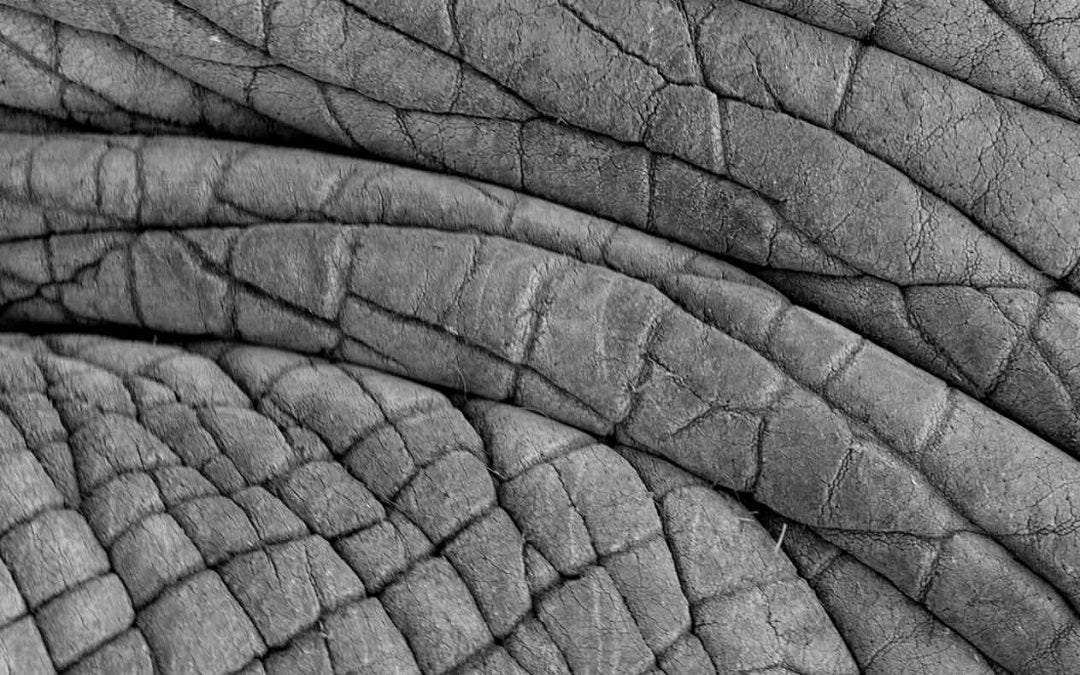
The appearance alone can draw unwanted attention. Deep lines, scaly texture, and visible thickening often make people stare, sometimes even ask questions that sting more than the itch itself. Comments like “what happened to your skin?” or “why does it look like that?” aren’t uncommon. Elephant skin can feel like wearing your condition for the world to see, without the option of hiding it.
There are ways to manage it. Emollients and barrier creams can help soften and hydrate thickened areas. Topical medications or wet wraps may calm inflammation. More recently, research into biologic treatments is offering hope for reversing severe lichenification by calming the overactive immune response that drives it. But just as important as medical management is shifting how we see it socially: elephant skin is not something to ridicule, but something to recognise. It is one of the many faces of eczema.
Destigmatising elephant skin starts with talking about it openly. For every person living with it, there’s another who has felt the shame of stares or the sting of cruel comments. By naming it, describing it, and refusing to hide it, we strip away some of the mystery, and the stigma.
Elephant skin is not the whole story of eczema, but it’s part of it. And the more we understand, the more compassionate we can become toward those whose skin tells a story that’s deeper than the surface.
- J